The More Serious the Problem, the More You Should Play
Priti Agarwal walked away from a comfortable corporate career with no plan, just a name she liked: The Catalyst. Fifteen years later she builds games that teach leaders to lead. On surviving two near deaths, an Ironman her son wouldn't let her quit, and the year she stepped back and the numbers went up.
5 min read

Before we started recording, Priti Agarwal told me something that reframed how I think about hard problems. The more serious the problem, the more playful you have to be.
She used a sponge to explain it. Squeeze it tight, and nothing gets in. Let it go, and it soaks up everything. Most of us do the opposite. The harder things get, the tighter we grip.
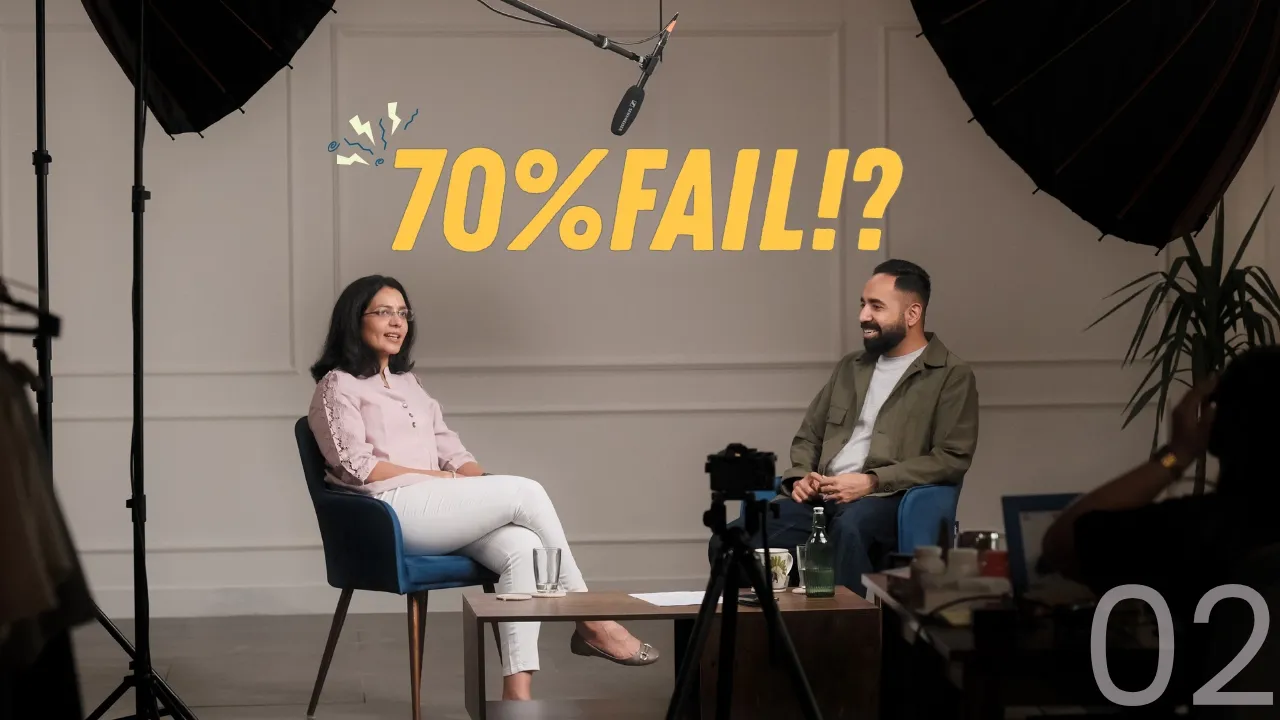
I had wanted to sit down with Priti for a long time. She is the founder of The Catalyst, a leadership development company that does not run the usual two-day corporate workshop. She builds games. Actual simulations where leaders make real decisions under pressure and then sit with the consequences, all inside ninety minutes. But the reason this conversation stayed with me is simpler than her method. She has spent fifteen years teaching people how to lead, and then kept live testing whether she was listening to her own lessons.
[EMBED: Instagram Reel or YouTube Short. "There is a science and a method to leadership" cold open]
A name, and no plan
Priti's career started in sales at Hindustan Lever, then in strategy at Accenture. Safe, comfortable, work from home, a young baby. And she was restless. Not because anything was wrong, but because she was not built to sit still.
Her husband, Sameer, an entrepreneur, gave her a clean choice. Either quit or stop cribbing. So she quit. Her father and father-in-law asked the obvious question. Do you have a plan? Her answer has stayed with me. "Not really. I have a name. It's called The Catalyst."
That is it. She walked away from a cushy job with a name and a hunch. Once you set the goal, she told me, you find you can work out the rest.
Twice, it almost did not survive
The Catalyst began as an employability business, assessing and training students from tier-two and tier-three colleges and placing them with good companies. It worked until a Supreme Court ruling shut down a chunk of her client colleges overnight. Her biggest client was gone. She was saddled with bad debt, and there were months she could not pay salaries.
What pulled her out was a single phone call. A contact at Pepsi asked her to run their induction training. She was desperate, so she said yes to whatever came her way. And in that desperation, she found a better business. People actually wanted to be in the room.
But she got restless again. The training was not sticky. People were not really learning. She went abroad to see how others did it, licensed formats from a company in the UK, and found them too expensive and too foreign for India. So she made the decision that defines the company today. Build our own games. Then Covid arrived, and every offline training in the country went to zero. A second near-death. It became, in time, her busiest year.
The best performer is rarely a ready manager
Here is the insight that runs through her work. Managers shape most of how a team experiences work, and yet almost no one is taught to manage.
Companies promote their best salesperson to manager as a reward. Priti's line on this is sharp. You lose a good salesperson, and you create a bad manager, because no one ever showed them how to lead a team. The job changes from doing the work yourself to getting it done through others, and that is a completely different skill.
That exact gap became the first game they ever built, called First Quarter. Not a lecture about leadership. A simulation where a new manager feels the first hard months, makes the calls, and lives with what happens.
Just do it, mumma
The part I did not expect was the Ironman story.
A doctor once told Priti, half-sarcastically, that she would not manage even five kilometres. She took it as a goal. With almost no swimming background, she trained and finished a half Ironman. Her point was not about fitness. It is that we constantly underestimate ourselves, and the moment you set a hard goal, your brain starts wiring itself toward it.
She was set to do a full race in Vietnam. Then her son had an accident, and she had to care for him. She had quietly made peace with letting the goal go. It is just a medal, she told herself. Until her son asked when she was leaving for Vietnam. She said she was not doing it. He looked at her and said, "Just do it, mumma."
So she did. And watching him heal, she said, taught her more about resilience than any race could. He was the one sitting up, eating, refusing to turn bitter. She was awestruck by him.
[EMBED: Instagram Reel or YouTube Short. "Just do it, mumma" clip]
The year she stepped back
Priti has run hundreds of sessions on delegation. Living it was harder.
When Raghu joined as CEO, she had to actually step back. She knew the answers. She could have fixed most things with a single phone call. Instead, she let the team feel the grind, lose a little business, struggle, and fail. People wondered where she had vanished. She had been the pillar holding everything up.
Then, last year, the company closed its highest numbers ever, without her in the middle of it. Her own read on it is disarming. Maybe I was the barrier, she said, and you needed me out of the system to fly.
What I keep thinking about
Back to the sponge.
Most of us, when things get hard, grip tighter. More meetings. Longer hours. Push harder. And the one thing we actually need, the space to think clearly, is the first thing we give up.
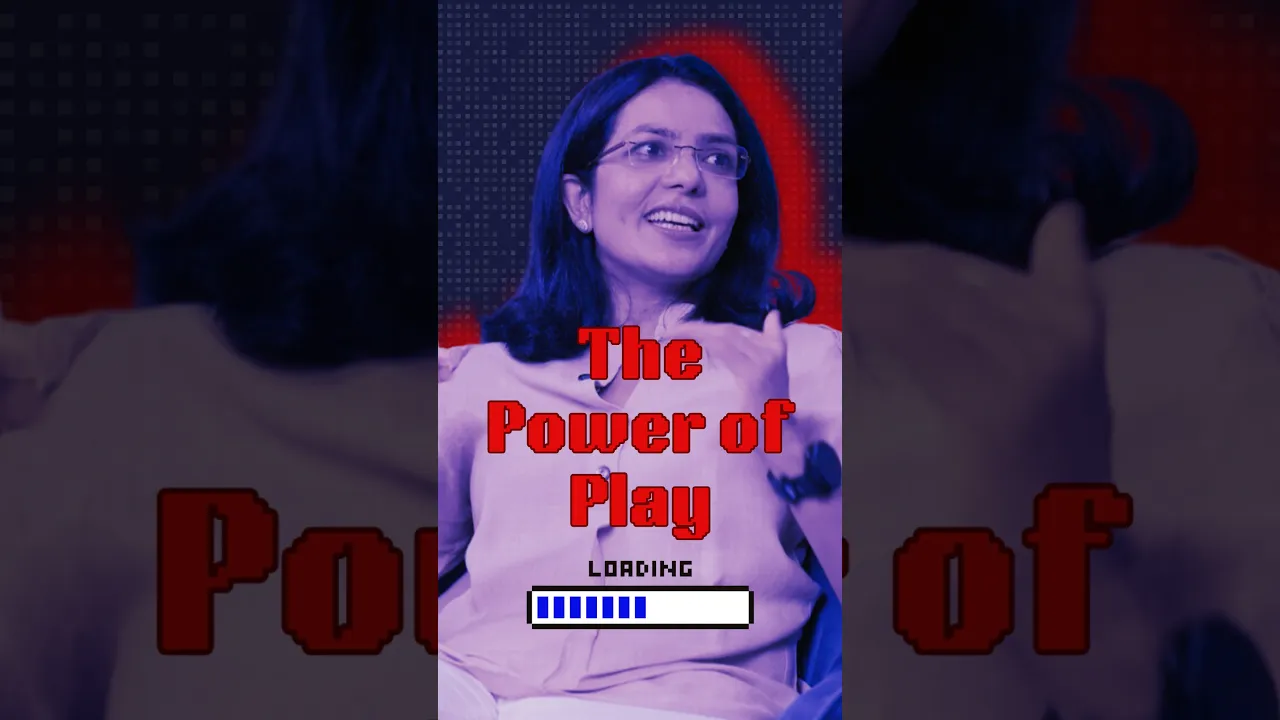
Fifteen years of building games that change how leaders think. An Ironman finish line she almost gave up on. A team that hit its best year the moment she loosened her hold. That is the story behind Priti Agarwal.
If this made you think of someone in your life, a founder, a manager, anyone stepping into something they were not quite ready for, send it to them. That is the best thing you can do with this one.
I'm Ravneet Oberoi. This is The Story Behind.
Join the newsletter
Be the first to read our articles.