The Thread Broke Because of Us
In 2014 I filmed the men who make kite string by hand in an alley in Ahmedabad. The thread broke while we were shooting and they threw us out. I went back the next day.
6 min
Tomorrow, the sky over North India will fill with kites. Delhi, Lucknow, Bareilly, the whole belt. Independence Day is our kite day, the way Sankranti is Gujarat’s.
Somewhere in that sky tomorrow there is a thread that a man made with his hands.
In December 2014 I was in Ahmedabad shooting a feature with the cinematographer Tanay Satam. One evening after wrap I passed a gap between two buildings. Not a lane. A gap. The kind you walk past without registering.
Colour was coming out of it.
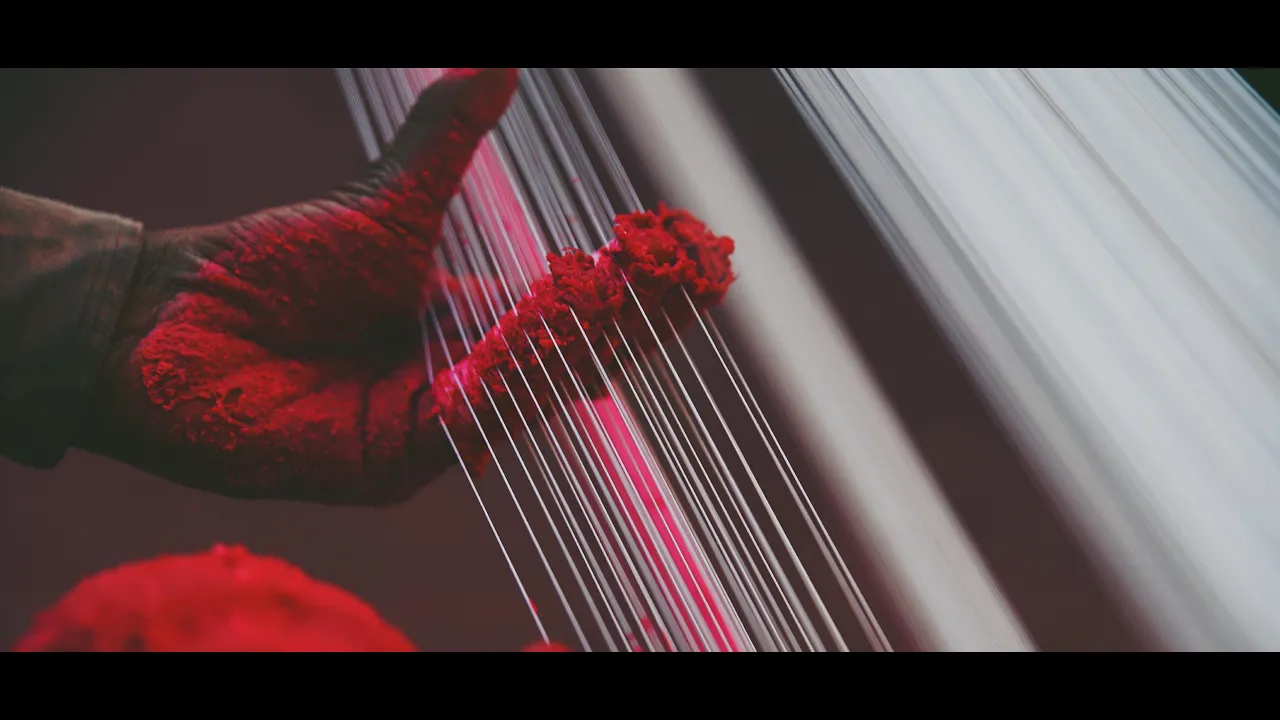
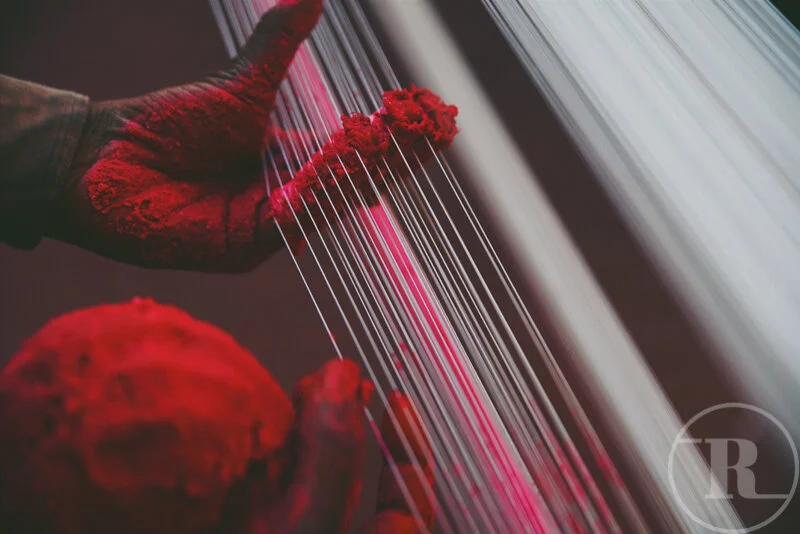
Six or seven men had strung threads from one wall to the other and were working along them. Some tying, some colouring. It looked like nothing. It looked like men doing a simple thing slowly.
I stood there longer than I meant to.
A few days later our shoot got cancelled. I went back to the hotel, picked up the gear, pulled a couple of colleagues along, and went to film them.
I wanted to talk to them first. You're supposed to. But this is work you cannot look up from. The thread has to hold. If it breaks while they're working it, the buyer pays less, because a manja that snaps in a kite fight is a manja that lost. So they talked to me the way you talk to someone while driving. Eyes forward, hands moving.
What I got in pieces: they come down from Lucknow every year, about two months before Makar Sankranti. They work the season. Then they go home. The day starts at seven in the morning and ends around ten at night, with no lunch break. Not a short one. None. They are paid two hundred to three hundred rupees per charkhari, per roll.
The roll is the unit of the day. The day is the unit of the life.
This is how it's made. Sticky rice, cooked. Colour mixed in, whatever the buyer asked for. Then finely ground glass, because the thread has to cut. Then butter, a lot of it, worked in at the end, so the buyer's hands don't get shredded holding it.
Read that again. Butter, so the man flying the kite doesn't bleed.
Their hands bleed. All day, every day of the season. That's what ground glass does to the hands that apply it, and they apply it for fifteen hours, and then they come back the next morning and do it again. This isn't a job somebody took. It came down to them from their fathers.
Then the thread broke.
It broke while we were filming, and the break was ours. Maybe the camera, maybe the lights, maybe just four strangers standing in a working space three feet wide. The buyer started shouting at the man in front of everyone. There was a queue of buyers behind him waiting their turn.
We were asked to leave.
I went back the next afternoon and finished the shoot.
I've thought about that more than anything else from that trip. I had already cost one of them a day's rate and his dignity in front of his customers and his children, and I returned the next day because I wanted the film. I don't have a clean way to sit with that. I had a camera, a free afternoon and a strong feeling, and I've learned since that a strong feeling is not the same as a plan.
I noticed the eyes late. Most of the men had a squint. Then I looked at the children, because there were children working, and they had it too.
I'm not a doctor. What I know is what I saw. Men who spend fifteen hours a day looking at a thread from six inches away stop looking at things straight. Their sons were already going the same way.
On Sankranti, the whole of Ahmedabad looks up. Roofs full, necks back, sky covered.
They're the ones looking down.
In August 2016 I read that the Delhi government had gone to the High Court to ban Chinese manja. I wrote this in my journal that day.
I do not understand why our government only think of banning things which affect so many lives, and for some the damage is irreparable. No amount of money can compensate their bruised hands and passion.
I was angry, and I wanted somebody to send these men better equipment.
Here's what I understand now that I didn't then. Nobody had to ban them out of business. The Chinese thread did that on its own. Machine-made nylon, produced at scale with infrastructure behind it, cheaper and stronger and everywhere, and it had already taken the market by the time I was standing in that gap. The men I filmed were competing against a factory with their hands.
Then the bans came, and the bans were right. That thread took birds out of the sky and opened people's throats on flyovers. But the orders didn't stop at nylon. Glass-coated cotton has been prohibited too, state by state, and the men in the gap made glass-coated cotton.
Undercut by the machine first. Outlawed alongside it after.
Delhi Police will seize sacks of banned manja again this week. They do it every year, before Sankranti and before tomorrow. It's the right thing to do, and I hope they find all of it.
I still don't know what happened to those men. I filmed them for two days and never got a single name. I don't know whether the season still calls anyone down from Lucknow, or what replaced two hundred rupees a roll when it stopped. I've thought about going back to that gap between the two buildings. I haven't gone back.
What I have is a few minutes of footage of a trade in its last years, shot fast and badly by someone who didn't know that's what he was filming, and who broke their thread while he did it.
Look up tomorrow. Somebody's hands are in that sky.
Join the newsletter
Be the first to read our articles.


