The Man Who Bet Thirty Years on a Word Called Conservation
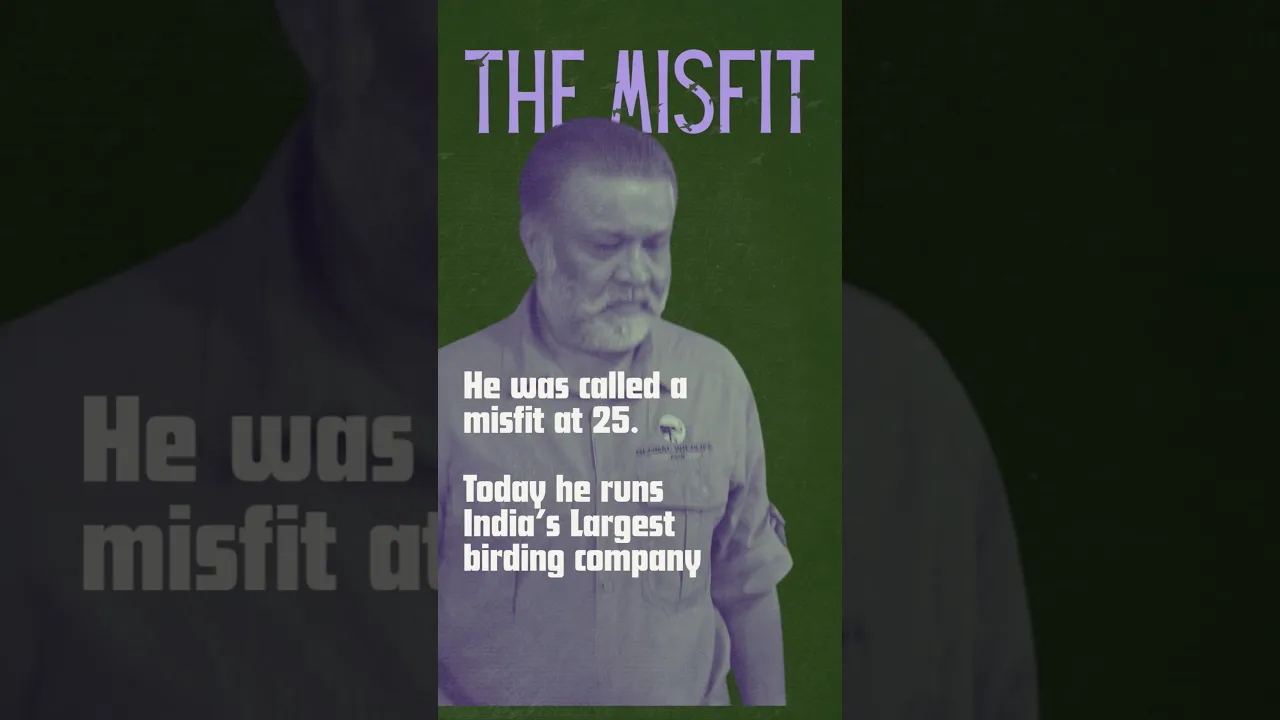
In 1994, Mohit Aggarwal did three things most people wouldn't. He left a family business he didn't belong in. He took a wildlife conservation job that paid one hundred and fifty rupees a day. And he started a tourism company for a category that didn't have a name yet. Three decades later, Asian Adventures is India's largest birdwatching tour operator, and Mohit is still holding the line on what he calls generative tourism. This is what he told me.
6 min read

The first thing Mohit Aggarwal told me was a memory of chilling mangoes in a tubewell.
He was in class four. Amritsar. The 1970s. No electricity for days at a time. You lowered a jute sack of mangoes into the running cold water of a tubewell, jumped in yourself, spent the afternoon there, and came home with a jug of rooh afza and bhartha and roti waiting under a tree.
I sat with that for a minute. Not because it was picturesque, but because it was the first honest window into where the man's entire philosophy comes from.
Mohit is the founder of Asian Adventures, the largest birdwatching tour operator in India. He built the country's first dedicated birding lodge in Pangot. He founded the Global Wildlife Fair, which drew twice its expected footfall in its first edition last year. He runs Earth Walks, weekly free nature walks in cities across the country. And he has spent thirty years defending a position that most of his own industry has quietly chosen to abandon.
The position is this. Tourism can be generative. Or it can be extractive. Most of what we call tourism today is the second thing.
The 1994 decision
When Mohit graduated, he went to work in his family's steel and manufacturing business. It didn't fit. He was a misfit, in his own words, and he left. A friend at TRAFFIC India, an organization tracking illegal wildlife trade, offered him a role. The salary was 150 rupees a day. Three months in, WWF thought that was too much, and made him a permanent employee at 3500 rupees a month. He was thrilled.
For five years he worked there. Then, in 1994, he walked out. Not because there was a plan. Because he wanted to travel to natural places and take people with him. There was no such thing as conservation tourism in India then. There wasn't even a phrase for it.
"I'm not too sure I knew how it worked," he told me. "I just wanted it to work."
Every client came from abroad. They were donors funding conservation projects, and they needed someone in India to sort their logistics. There was no digital marketing. There was a telex, a telegram, and a fax. There was one line phone at 75 rupees a minute. And there was Mohit.
The lodge, the leopard, and the neighbour's land
Years later, he built a lodge in Pangot on a piece of land near Nainital. He refused to break the terraced farming. He built on stilts where the ground jutted out. He kept four cottages on one acre because he wanted to reforest the rest.
That land is now the most forested patch in the area. Transient tigers walk through. Rare species breed there. There is what he calls an in-house leopard that walks the property.
When his neighbour was about to sell his land to a builder, Mohit offered to pay the same amount as a lease, on the condition that the neighbour keep it wild for his own next generation. He called that patch his wildlife heritage area.
"When I say regenerative," he said, "it's because you don't have to do anything. You just have to let it be."
Land is no longer maa
Somewhere in the middle of the conversation, he said the line that has stayed with me since.
"Land is no longer maa. It's real estate."
Six words. And they hold the entire tension of what he's spent thirty years trying to say. Not with anger. Not with despair. Just with the clarity of someone who has seen the same story play out in too many places to be surprised anymore.
He quoted Gandhi to me. "There's enough for every man's need on this planet, but there's not enough for everyone's greed."
The fair, the network, and the walk
When COVID hit, Mohit did what he does. He stopped, reassessed, and built something larger. Four years of curation later, the Global Wildlife Fair happened in 2025. A hundred plus exhibitors. NGOs, tour operators, community groups, conservationists, governments. Its footfall doubled the anticipated number.
But the fair, he told me, is not the point. The point is what happens for the entire year until the next one. Whether the NGOs found their donors. Whether the students found their teachers. Whether the communities got their fair share of visibility. That, he said, is where success actually lives.
He also runs Earth Walks. Free weekly walks in cities across India. Delhi, Pune, Kolkata, Ahmedabad, Gir, parts of Uttarakhand. Bombay and Jodhpur next. Every week. No entry fee. Because, he said simply, the company can afford it right now.
I asked why free. He mentioned Chanakya. "You get into business to make this place a better world," he said. "That is the purpose of any business."
The word that holds it all together
If there's one word Mohit uses more than any other, it's consciousness.
Not the spiritual idea. The daily practice. Unplugging your TV when you leave home. Not buying another pair of sandals. Not letting the water run while you brush your teeth. The recognition that everything you touch has a source, and everything you throw away goes somewhere.
"It's not hard," he said. "It's consciousness."
Toward the end, I asked him what peace with life actually meant, because he had used the phrase in an earlier call. He thought for a moment.
"I've come into this world for myself," he said. "And I must live this life beautifully. If I have to live this life beautifully, then my ecosystem has to be beautiful."
That's why he built Asian Adventures. That's why he built the fair. That's why he walks the earth every Sunday morning with strangers, telling them the names of birds.
The kid who chilled mangoes in a tubewell in Amritsar is the same man now. He is not romantic about the past. He is not angry about the present. He is just very clear about what has been lost, and very patient about what is still possible.
That patience is the story behind Mohit Aggarwal.
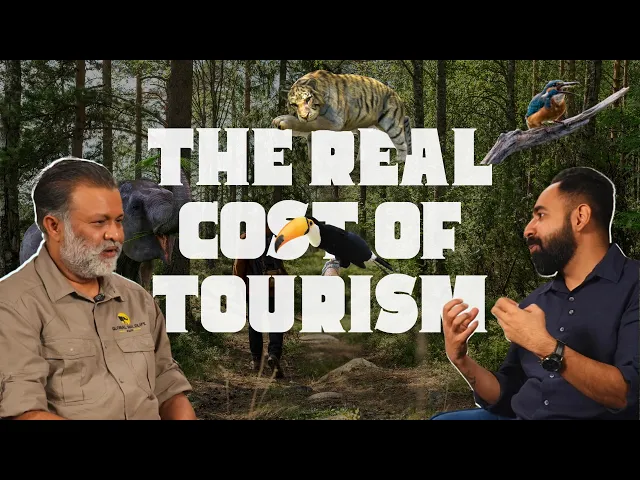
The full conversation is on The Story Behind, Episode 05.
Join the newsletter
Be the first to read our articles.