Choose Hope
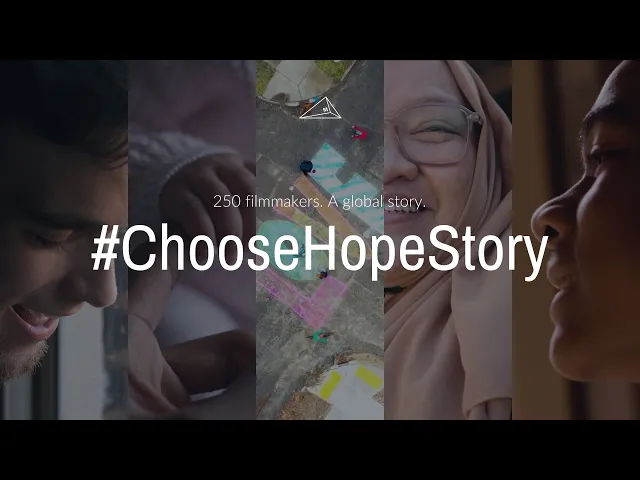
In the early days of the lockdown, over 250 filmmakers around the world came together to make one film about what was holding us up. I was one of them.
I remember the early days of the lockdown less as a single moment and more as a kind of stillness that didn’t know what to do with itself. I ran a video production company, and every shoot I had was postponed indefinitely. I was used to being out with a camera, reading a room, following a story as it happened in front of me. Suddenly, there was nowhere to go and nothing to point a lens at.
Then an email arrived from Muse Storytelling. Patrick Moreau and the Muse community were activating filmmakers around the world to make something together, a film about the lockdown, but not about the virus itself. About what people were doing in spite of it.
I said yes immediately. I wanted to document what was happening around me and to look at it honestly, which meant looking for the parts that were good. Not to pretend the crisis away, but to notice what was still standing.
What followed was ten days that moved fast and felt slow at the same time. Breaking the story down into shots, working within whatever restrictions the government had set that week, sending footage across time zones to people I had never met, watching the edit come together from pieces shot in Kenya and Italy and the Philippines and my own home in India. It was strange to be part of something so large and so intimate at once. Over 250 filmmakers, headquartered out of Portland, Oregon, all pointing their cameras at the same question from completely different corners of the world.
Patrick said something at the time that has stayed with me since. That the point of gathering these stories wasn't to look away from what was hard, but to be able to look back one day and say that when things got difficult, people showed up as their best selves. That felt true then and it still does.
I was one contributor among many on that film, not the person who built it. Muse Storytelling and Patrick's leadership held the whole thing together, and a community of filmmakers I'd never worked with before taught me something about what collaboration can look like when everyone involved actually cares about the outcome.
Looking back, I think that project shaped how I think about storytelling more than I realized at the time. Not as a service you deliver, but as something you choose to make, even when nothing about the moment asks you to.
Join the newsletter
Be the first to read our articles.