The Story of a Box Camera
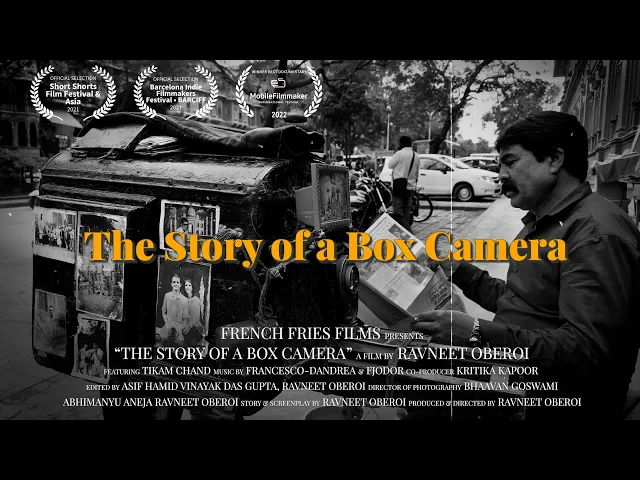
A short film about Tikam Chand and his 160-year-old box camera, shot on two iPhones in Jaipur just before the world shut down, and finished in the strange quiet that followed.
5 Min

Everything moves toward the next thing. Faster cameras, higher resolution, a future none of us can quite see. So there’s something quietly grounding about stopping to look backwards instead, at how a thing used to be done, and how far we’ve come from it. Spending time with Tikam Chand and his box camera let me do exactly that.
I first came across him by accident. Joey L, a photographer whose work I've admired for years, was traveling through Rajasthan and posted a series of stories about a man in Jaipur still making portraits on a box camera over 160 years old. A few frames of the process, this idea of using the past to capture the present. I couldn't shake it. It struck me as a story that deserved a proper film, and I kept wondering why no one had made one.
The timing was never going to be convenient. I was deep in shoots, weeks away from getting married, with a hundred other things demanding attention. Then Moment announced their annual smartphone film challenge, with a deadline at the end of March 2020, and it gave the idea somewhere to go. A few filmmaker friends came on board, we confirmed Tikam Chand was available, and we drove to Jaipur.
There was a deliberate choice in how we shot it. We used only two iPhones. It felt right that a film about the oldest camera I'd ever seen should be made on the most modern one most of us carry. We reached Jaipur on a Friday evening and finished the whole shoot by Saturday night. Quick, efficient, and completely unaware of what was coming.
We drove back to Delhi, ready to slot back into normal life, and the first COVID curfew was announced almost the moment we returned. Projects cancelled, everything ground to a halt, even the wedding plans had to be rethought. We were locked in.
The one gift the pandemic offered was time and a clearer sense of what mattered. With client work frozen, we turned fully to Tikam Chand's story. Of course it fought us. The memory cards failed, and the recorded sound came back corrupted. We salvaged the backup audio we'd captured on a phone mic and rebuilt from there. It was frustrating in the way these things always are, but by the end we had something we believed could travel, and it felt like we owed him that. His own customers had vanished with the lockdowns, and the least the film could do was point people back toward him.
We got it finished with a lot of help from friends and family, and a lot of encouragement from my wife, Kritika, who lived through every version of it with me.
Then we started submitting it, and at first it went nowhere. That stung, but we kept sending it out, and eventually it found its rooms. It was nominated at festivals in Tokyo, Barcelona, and beyond, and at the Mobile Filmmaker International Film Festival in 2022, it won Best Film. Watching a film we'd stitched together through corrupted audio and a global shutdown find that kind of recognition was its own strange reward.
The thing I keep coming back to is the process itself. A hundred and sixty years ago, making a single photograph meant creating a negative by hand, then converting it to a positive, judging exposure entirely by instinct. Bright day, expose short. Overcast, hold it longer. No screen to check, no second chances, just patience and skill and hours of labor to hold one moment still. Today the image appears before you've even pressed the shutter, corrected and sharpened before you've decided you wanted it.
I wanted to document that older way of seeing, and to do it with the newest tool I had. Somewhere between Tikam Chand's box and my phone is the whole story of what photography has become, and what it quietly gave up along the way. That gap is what the film is really about.
Join the newsletter
Be the first to read our articles.